Real Estate Videography: 2026 Property Marketing Guide

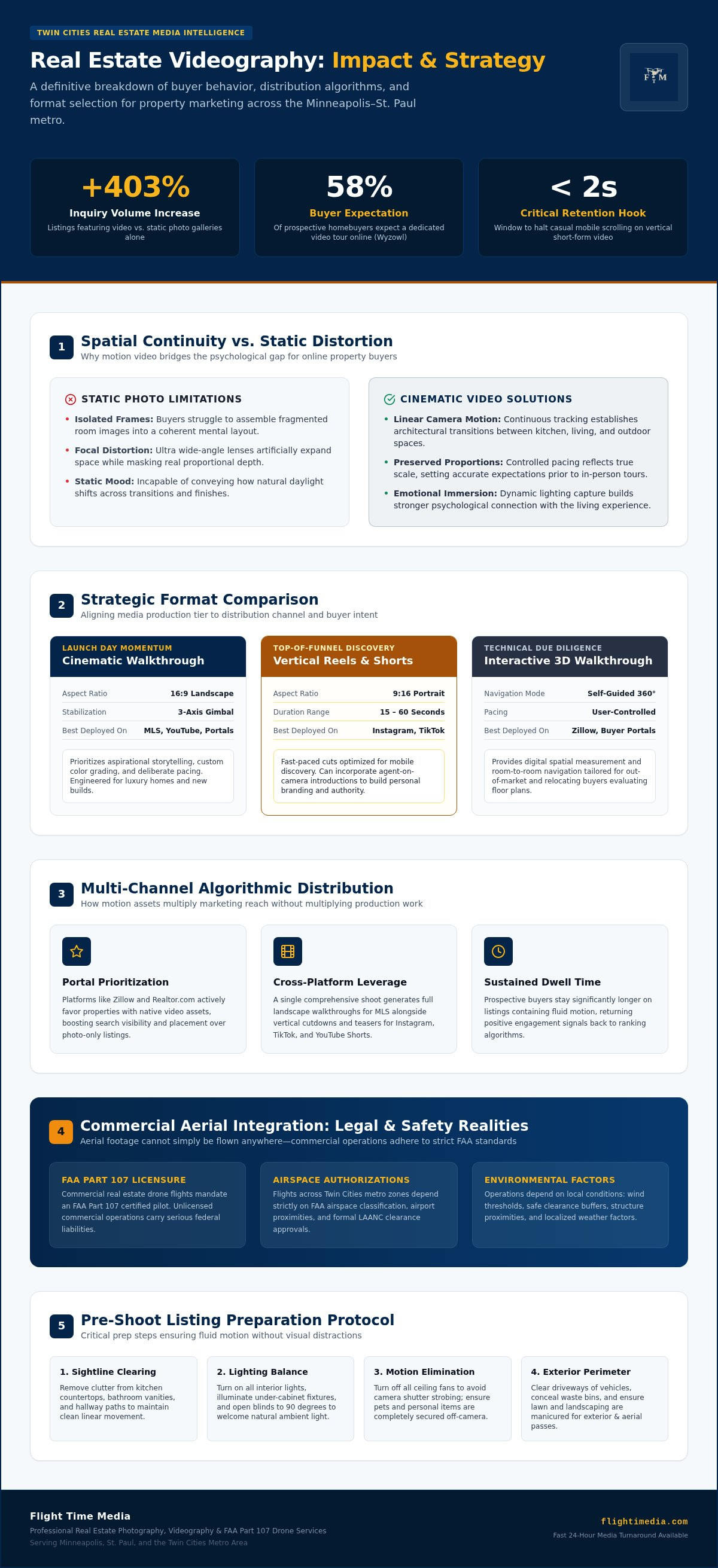
Real estate listings featuring video generate up to 403% more inquiries than static photo galleries alone. You already know that standard still images cannot fully capture a property's true scale, architectural flow, or lived experience. Discerning buyers want an immersive preview before scheduling an in-person showing, yet investing in professional real estate videography often introduces friction into your workflow. Between tight MLS launch deadlines, shifting social platform requirements, and the fear of slow media turnaround times, choosing the right production approach can feel like an unnecessary gamble with your brand reputation.
You don't have to guess which video style delivers the highest return on investment for your seller. In this guide, you will discover how professional real estate videography elevates listing engagement, compares formats, and accelerates sales across every tier of inventory. We break down the technical standards, Part 107 drone integration rules, and distribution strategies top producers use to maximize dwell time and turn casual scrollers into serious buyers.
Table of Contents
Why Real Estate Videography Is Essential for Modern Property Marketing
The Core Types of Real Estate Videography: Comparing Formats and Use Cases
Technical Standards That Differentiate Professional Video from Amateur Walkthroughs
Preparing a Twin Cities Property for Real Estate Videography: The Listing Checklist
How to Choose the Right Real Estate Videography Partner in Minneapolis-St. Paul
Why Real Estate Videography Is Essential for Modern Property Marketing
Static photographs capture isolated moments, but they rarely capture the full living experience of a home. Buyers assessing properties online struggle to assemble separate room photos into a coherent mental floor plan. Professional videography solves this disconnect by bridging visual aesthetics with commercial property strategy, presenting buyers with a continuous spatial journey that static media cannot replicate.
According to research from Wyzowl, 58% of homebuyers expect a video tour when evaluating a property online. Meeting this baseline expectation transforms passive browser interest into actionable intent. Video assets hold prospective buyers on your listing longer, deepening their connection to the architecture and accelerating their decision to schedule an in-person showing.
Connecting Emotional Lifestyle with Spatial Architecture
Wide-angle lens photography expands small rooms to fit within a single frame, but it often distorts actual room depth and masks how living spaces connect. Professional real estate videography preserves true architectural proportion through controlled, linear camera movement. As the lens tracks from a chef's kitchen into an open living room or steps toward an outdoor patio, buyers gain a clear sense of functional flow. Capturing shifting natural light across custom finishes builds an emotional resonance that static images simply cannot match.
Maximizing Reach Across MLS, Zillow, and Social Channels
Modern distribution channels actively reward video-first marketing campaigns with increased algorithmic visibility:
Search Portal Prioritization: Platforms like Zillow and Realtor.com prioritize listings featuring native video assets over photo-only entries, elevating your placement in buyer search results.
Cross-Platform Asset Leverage: A single cinematic walkthrough produces vertical cutdowns, teasers, and agent-led segments that generate substantial organic reach across Instagram Reels, TikTok, and YouTube Shorts.
Sustained Dwell Time: Prospective buyers spend significantly more time engaging with listings that feature motion media, signaling strong buyer interest back to portal ranking algorithms.
Integrating listing video does not replace the requirement for pristine still imagery; rather, both formats work together. For property presentation baselines and staging expectations, review our comprehensive guide to professional real estate photography services. Pairing high-resolution stills with fluid motion establishes a frictionless, authoritative marketing presentation that protects your listing timeline and enhances your standing with home sellers.
The Core Types of Real Estate Videography: Comparing Formats and Use Cases
Every property demands a calculated marketing strategy. Choosing the right video format is not about buying the largest package available; it is about matching visual production to buyer psychology, price point, and distribution platforms. Research from the National Association of Realtors demonstrates that digital media adoption directly shapes consumer inquiry rates. Selecting the wrong format wastes marketing dollars, while deploying the correct style builds instant momentum.
Cinematic Walkthrough Tours vs. Traditional Virtual Walkthroughs
Cinematic walkthroughs use deliberate 3-axis gimbal movements, intentional pacing, and specialized color grading to tell an architectural story. They evoke an aspirational feeling for luxury properties, custom builds, and sprawling estates. In contrast, self-guided virtual tours offer functional, 360-degree digital exploration. Use cinematic property films to drive emotional excitement on listing launch day, and reserve interactive 3D tours for technical due diligence by remote buyers.
Short-Form Social Media Reels and Agent-Led Video
Vertical 9:16 video serves as the engine for initial property discovery. Platforms like Instagram Reels, TikTok, and YouTube Shorts favor short-form videos lasting 15 to 60 seconds. Structuring these videos with a strong visual hook in the first two seconds stops casual scrollers on mobile devices. Stepping in front of the lens for an agent-guided tour transforms standard property footage into an authority-building brand asset. Buyers connect with clear voices and local market knowledge, positioning you as the go-to neighborhood authority.
Aerial Drone Videography for Acreage, Waterfront, and Neighborhoods
Ground-level cameras cannot reveal the relationship between a home and its surroundings. Aerial drone footage establishes critical context for acreage, lakefront parcels, and master-planned communities by clearly showing lot boundaries, tree lines, and proximity to local amenities:
Regional Context: Highlight walkability, nearby parks, and surrounding lakes across Twin Cities communities like Minnetonka, Edina, and Wayzata.
Regulatory Compliance: The FAA strictly enforces commercial airspace laws under Part 107. Commercial drone operations require a licensed remote pilot, Remote ID compliance, and airspace authorizations where applicable.
Operational Limits: Aerial flights remain strictly subject to localized weather conditions, active airspace restrictions, and FAA safety guidelines.
If you need advice on structuring your visual campaign, explore how our dedicated real estate videography and media solutions give your upcoming listings a distinct market edge.
Technical Standards That Differentiate Professional Video from Amateur Walkthroughs
Walkthrough videos recorded on a smartphone often fall flat. Jerky footstep jitter, blown-out exterior windows, and hollow audio signal amateur production, undermining both property value and client perception. High-tier real estate videography demands calibrated stabilization, dynamic exposure balancing, and methodical post-production workflows. Applying professional real estate video production principles separates run-of-the-mill recordings from persuasive marketing films.
Achieving this level of polish comes down to specific technical benchmarks:
Motorized Stabilization: Electronic 3-axis gimbals absorb operator footfalls and micro-shakes, creating seamless, gliding tracking shots through tight doorways and across open living rooms.
Color Temperature Normalization: Post-production grading balances cool 5600K daylight streaming through windows with warm 2700K interior ceiling lights, eliminating harsh yellow color casts.
Distortion-Free Framing: Rectilinear wide-angle lenses keep vertical lines plumb, ensuring walls, tall kitchen cabinetry, and custom fireplace surrounds remain straight without fisheye curvature.
Lighting Control and High Dynamic Range Interior Capture
High-contrast lighting represents the toughest challenge in real estate media. Direct sunlight flooding through living room windows easily overexposes the background, turning lush landscaping into an unreadable white glare while casting dark shadows across interior floors. Professional real estate videography uses 10-bit color profiles and wide dynamic range camera sensors. This approach captures balanced exposure across bright window views and deep interior recesses in a single continuous pass, keeping natural finishes and outdoor vistas intact.
Sound Design, Acoustic Mastering, and Royalty-Free Music Curation
Visual motion delivers impact, but sound design seals emotional engagement. A chaotic track or harsh echo breaks buyer immersion immediately. Agent-led walkthroughs require wireless lavalier microphones to capture articulate voice audio free from cavernous room reverb. Curated music pacing must complement the architectural character of the home, matching property tone seamlessly. Additionally, every soundtrack must carry commercial licensing clearance to protect your listing tours from instant copyright mutes and account penalties across YouTube, Instagram Reels, and MLS virtual tour feeds.
Preparing a Twin Cities Property for Real Estate Videography: The Listing Checklist
Still photography allows an operator to shuffle clutter behind the tripod as they move from room to room. Professional real estate videography leaves no room to hide. A continuous tracking shot sweeps across entire living areas, revealing adjacent hallways, floor transitions, and ceiling heights in a single fluid sequence. Preparing the home properly before the camera crew arrives avoids costly delays and keeps your MLS launch date on schedule.
Execute these four essential preparation steps prior to shoot day:
Step 1: Clear Core Sightlines: Remove shoes, pet beds, floor runners, and surface clutter from entryways, hallways, and main living zones.
Step 2: Balance Interior Illumination: Switch on every overhead light, lamp, and under-cabinet fixture while setting window blinds to horizontal positions.
Step 3: Depersonalize Every Space: Store family portraits, refrigerator magnets, and personal vanity items so buyers focus on the home's architecture.
Step 4: Secure the Exterior Perimeter: Move vehicles off driveways and store yard equipment out of sight to ensure clean approach angles.
Staging Specifically for Continuous Camera Motion
Because the lens moves steadily through doorways and living spaces, small obstacles disrupt the visual flow. Remove loose area rugs that bunch up or visually chop up hardwood flooring. Tuck away charging cables, power strips, and bathroom countertop toiletries. A clean, unobstructed pathway allows the gimbal operator to capture sweeping, uninterrupted takes that emphasize spaciousness and seamless layout transitions.
Exterior and Curb Appeal Preparation for Aerial Filming
Outdoor drone footage captures the property from wide, elevated perspectives where misplaced objects become obvious eyesores. Park all cars inside closed garages or move them completely down the street away from the house. Stow garden hoses, trash bins, and patio grill covers out of sight. Across Twin Cities neighborhoods in Minneapolis, Edina, and St. Paul, sweep walkways clean of seasonal lawn debris, fallen branches, or uneven snow piles to ensure clean boundary lines on camera.
Take the friction out of your marketing workflow with a dependable media team. Schedule your property media shoot to secure fast turnaround times and market-ready visual assets for your next listing.
How to Choose the Right Real Estate Videography Partner in Minneapolis-St. Paul
Property marketing requires more than creative framing. It demands strict operational punctuality, reliable technical execution, and regional market insight. Real estate professionals across the Twin Cities work under firm MLS timelines where a delayed video edit can derail an entire launch campaign. Partnering with the right real estate videography provider protects your brand reputation and ensures high-impact visual assets reach buyers the moment your listing goes live.
When assessing media vendors in Minneapolis and St. Paul, look past highlight reels and evaluate operational capabilities:
Portfolio Consistency: Review full listing walkthroughs rather than curated highlight clips to evaluate stabilization, true-to-life color grading, and architectural framing.
Airspace and Safety Compliance: Confirm your videographer operates under an active FAA Part 107 commercial remote pilot certificate and carries dedicated liability coverage. Commercial drone flights remain subject to FAA airspace clearance, safety protocols, and regional weather.
Production Velocity: Choose a visual media partner with streamlined workflows and dependable delivery windows so you never miss a scheduled MLS launch date.
Essential Questions to Ask a Media Company Before Booking
What is your exact turnaround timeline for initial video cuts, revisions, and final delivery?
Do your packages grant full commercial licensing rights for MLS distribution, social media marketing, and digital advertising?
How do you handle airspace authorizations and weather delays for aerial drone filming near regional airports?
Streamlining Media Production with Flight Time Media
Flight Time Media removes logistical friction for agents, builders, and developers across Minneapolis, St. Paul, and surrounding metro communities. We combine smooth interior ground motion with legal aerial perspectives to produce listings that stop buyer scrolling. Our FAA Part 107 licensed pilots manage local airspace authorizations safely, ensuring aerial perspectives showcase your property lot lines and neighborhood context accurately. Backed by rapid 24-hour turnaround on property photography packages, our crew keeps your listing calendar moving forward without delay.
Explore our complete suite of professional visual media services to streamline your listing workflow and present your properties with confidence.
Transform Your Twin Cities Property Marketing Today
Strategic listing presentation turns casual online browsing into verified buyer interest. Incorporating professional real estate videography clarifies architectural flow, highlights premium finishes, and expands your listing's reach across major search portals and social feeds. Pairing cinematic interior tracking with legal, FAA Part 107 licensed aerial video gives prospective buyers a complete spatial perspective before they arrive for a private showing.
Flight Time Media eliminates marketing friction with rapid 24-hour turnaround on real estate photo packages, keeping your launch timeline strictly on schedule across Minneapolis, St. Paul, and the surrounding metro. Qualified new agent partners can also experience this streamlined workflow firsthand with their first real estate photography shoot free, complete with drone stills and a 2D floor plan. Schedule your next listing media shoot with Flight Time Media and give your upcoming property campaigns the competitive edge they deserve.
Frequently Asked Questions
How much does professional real estate videography typically cost?
Professional video pricing varies based on property square footage, parcel size, and required deliverables. Simple social reels require less filming time than cinematic luxury tours combining interior tracking and aerial perspectives. You can request a custom quote tailored to your upcoming listing tier directly from our team.
What is the difference between a real estate walkthrough video and a 3D virtual tour?
A listing video is a curated, high-definition cinematic film that directs the buyer's focus across architectural features and emotional highlights using smooth camera motion and music. In contrast, 3D virtual tours provide self-guided, digital scans that let out-of-town buyers inspect layout dimensions and room connections at their own pace.
How long does a real estate video shoot usually take on site?
Filming an average single-family home typically takes between one and two hours on site. Larger luxury residences, acreage properties, or shoots requiring both ground tracking and aerial drone flights may take longer. Having the property completely staged and camera-ready before arrival keeps the production moving swiftly.
Can drone videography be filmed at every property in the Twin Cities?
Drone flights depend strictly on FAA airspace classifications, temporary flight restrictions, and local weather conditions. We operate under commercial FAA Part 107 licensing and coordinate digital LAANC airspace authorizations when filming near Minneapolis-St. Paul International Airport or regional airfields. If high winds, active rain, or controlled airspace prevent safe flight, we reschedule promptly.
How fast will I receive the final edited listing video after filming?
Standard video production requires detailed color grading, sound synchronization, and pacing edits, typically taking a few business days for final delivery. However, our core real estate photography packages deliver within a rapid 24-hour turnaround window to ensure your initial MLS marketing launch stays strictly on schedule.
Are vertical real estate video reels effective for selling residential listings?
Vertical 9:16 reels are exceptionally effective for generating top-of-funnel property interest on Instagram, TikTok, and YouTube Shorts. Short-form clips capture immediate mobile attention and drive high share volume. They complement your standard horizontal MLS walkthrough by exposing the property to active local buyers browsing social feeds across the Twin Cities metro.
What should sellers do to prepare their home before the videographer arrives?
Homeowners must remove all floor clutter, hide charging cords, turn on every light fixture, and clear kitchen countertops completely. Because continuous real estate videography tracks across wide living zones and open doorways, tucking away trash cans, pet accessories, and personal toiletries ensures the final film showcases clean architectural lines without distracting visual clutter.


Comments