New Construction Photography: A Visual Guide for Builders

Updated: Sep 27
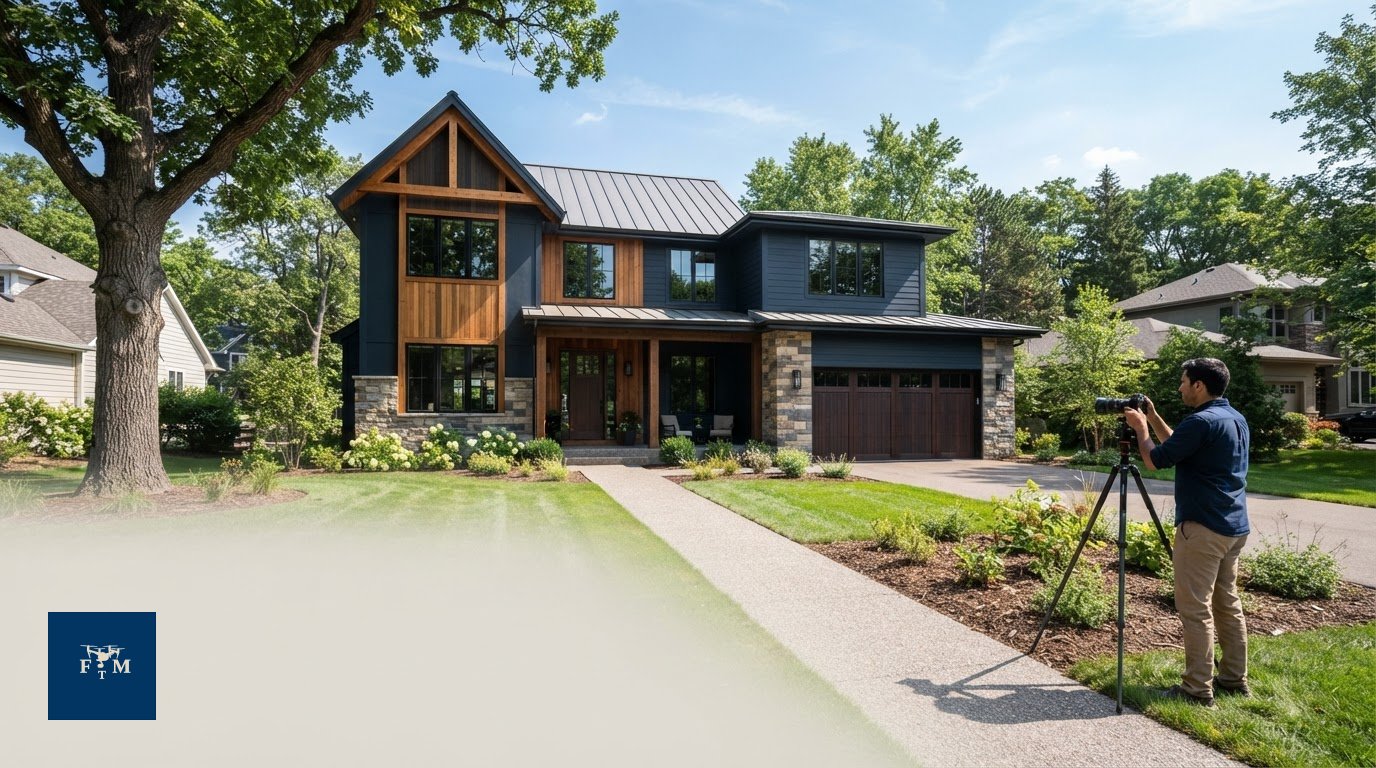
A finished home can look polished in every frame and still leave buyers unsure how its spaces fit together. Effective new construction photography does more than document completed rooms. It helps builders show a home’s design, craftsmanship, layout, and setting while representing its actual condition.
Choosing what to photograph depends on the project. A model home, a completed build, and a property still in progress each need a different visual plan. If construction schedules shift or a site isn’t ready, coordinating a shoot takes extra care. The goal is to capture images that support your marketing without suggesting a feature or level of completion the property does not have.
This guide explains which spaces and details deserve attention, how to match photography to the build’s marketing stage, and what to consider when planning around site readiness and access. Whether you’re marketing one home or building your brand across the Twin Cities, you’ll find a practical plan for clear, professional images.
Table of Contents
What New Construction Photography Should Show Buyers
New construction photography is visual coverage planned for a newly built or newly completed property. The goal isn’t simply to make each room look polished. Images should help buyers understand how the home is arranged, which materials and finishes are present, how visible details are executed, and how the property sits on its lot or within its setting. As an introduction to the wider discipline, architectural photography includes construction photography as a related genre.
For a Woodbury home, start with what is ready to show and where the images will appear. A nearly finished property may need coverage for an active listing, while a completed model may need reusable imagery for builder marketing. In either case, make sure the images reflect the home’s actual condition. Avoid framing that suggests a feature or level of completion that isn’t there.
Which buyer questions can strong property images answer?
Help viewers read the home as a connected space, not a set of isolated rooms. Plan consistent views through adjacent areas so buyers can follow how the kitchen, dining area, and living room relate, or see how an entry leads into the main level. Pair wide interior views with exterior context to show the home’s character and setting.
Use detail frames selectively. A close view can draw attention to a cabinet finish, fixture, tile pattern, trim, or another visible design choice. These images add the most value when they explain something that isn’t clear in a wider view. Together, the frames can show both how the home flows and which details define its design.
How does new-build photography differ from resale listing coverage?
A resale listing shoot is usually centered on presenting one home clearly to prospective buyers. Builder-focused imagery may serve a broader purpose: showing design choices, documenting features that appear across a project, or creating a visual library for a model home and community marketing. Neither approach is better by default. Choose based on the audience and intended use.
For one completed home, prioritize its strongest spaces and the features that distinguish that property. For a model or community, consider which repeatable features buyers should recognize, alongside images that provide a sense of the site and surrounding context. A clear brief helps the photographer choose coverage for a listing, a builder’s website, or other marketing materials. If the property is still being finished, confirm which areas are ready and plan around those conditions.
New Construction Photography Examples by Image Type
Build the image set around what each frame needs to explain. These examples are illustrative, not tied to a specific project. Use them to decide which images will make a new home easier to understand and market.
Wide exterior establishing view: Show the home’s overall design and immediate setting. This can introduce a completed custom build or provide a clear lead image for a model home.
Natural-light interior view: Photograph a key living space so viewers can read its proportions, finishes, and relationship to nearby rooms. This can support a listing or help a model home communicate its layout.
Close detail image: Focus on a visible finish, fixture, or trim detail. Use it to highlight a design choice or craftsmanship that may be less apparent in a wide view.
Exterior and site images that establish context
Choose exterior angles based on the property’s design. A front elevation can introduce the home’s architecture, while a rear or side view may explain features that aren’t visible from the street. Keep the framing grounded in what the image actually shows. A view of the home and nearby yard can offer context, but it shouldn’t imply verified lot boundaries.
For a multi-home community, the image plan may need to show a model, selected home styles, or the project’s broader setting. Aerial imagery can help explain a site or surrounding layout when an elevated view adds useful context. It is appropriate only when the operation is permitted and safe for the property and conditions.
Interior and detail images that show design choices
Start with the spaces buyers will use to understand the home: key living areas, the kitchen, bathrooms, and transitions between rooms. A wide view can establish a room’s feel, proportions, and relationship to nearby spaces. A closer frame can show a material or finish clearly. Match each detail to its purpose. A cabinet finish might matter for a builder’s design portfolio, while an adjoining-room view may be more useful to listing viewers assessing flow.
Model homes, custom builds, and communities call for different emphasis. A model may need consistent views of features buyers can expect to see again. A custom build may call for more attention to its distinctive choices. Community imagery may prioritize how homes relate to the site. For practical guidance on lighting and interior or exterior framing, review Adobe’s professional real estate photography tips.
For builders planning real estate photography in the Twin Cities, pair each requested frame with its intended use. This makes it easier to keep the shot list focused and the final image set useful.
Builder Photography Compared: Listing Coverage, Design Imagery, and Aerials
Choose coverage by the question the images need to answer. A completed home going to market may need a focused listing set. A builder promoting design choices or a community may need a different mix. Use this comparison to define the brief before booking.
Approach | Goal | Useful image types | Timing and audience |
Listing coverage | Present one finished home clearly for sale. | Key interior spaces, exterior views, and distinctive visible features. | Photograph when the home is ready for marketing. Designed primarily for prospective buyers evaluating that property. |
Design-detail coverage | Show material selections, fixtures, and craftsmanship. | Close details paired with wider views that establish where each feature appears. | Plan around the stage when finishes are installed and can be represented accurately. Useful for buyers comparing design options or for builder marketing. |
Community or site-context imagery | Help viewers understand a home’s relationship to its lot or a broader development. | Exterior views, images of relevant shared context, and aerials when appropriate. | Schedule when the site is presentable and the intended context can be shown clearly. May serve buyers considering a model or community. |
Interior and exterior images answer different questions, as the architectural photography genre makes clear. Build the image set around the home’s marketing purpose rather than adding coverage by default.
When is standard listing photography enough?
For a completed home with a clear listing goal, a focused set of professional photos may meet the brief. Before booking, identify the main rooms, exterior angles, and visible features buyers should notice. This keeps the shoot centered on the property instead of adding media without a defined audience or use. For more information about real estate photography services, review Flight Time Media’s photography offerings.
When might video or aerial imagery add useful context?
Video can help when movement through rooms or a visual narrative is central to the marketing plan. Aerial imagery may add context when the site, home placement, or surrounding setting matters to the viewer. It isn’t the right fit for every property. Operations depend on conditions, authorizations, and safety. Review the Twin Cities drone photography guide for more drone-specific considerations. Keep new construction photography at the center of the plan, then add video or aerials only when they communicate something still images alone may not.
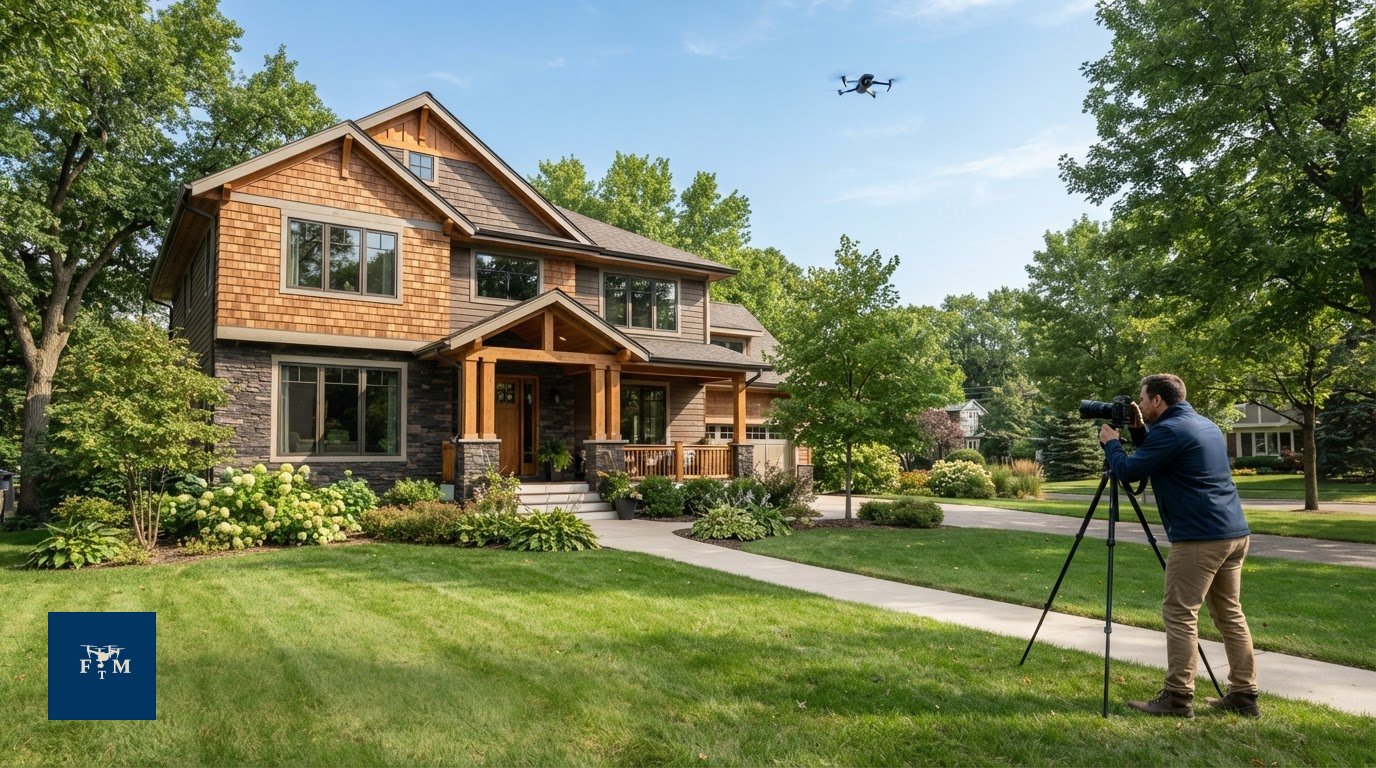
How to Plan a New Construction Photography Shoot
A clear plan helps the photographer focus on the right spaces and helps the project team prepare. Use this sequence to organize new construction photography around the build stage, audience, and intended marketing channels.
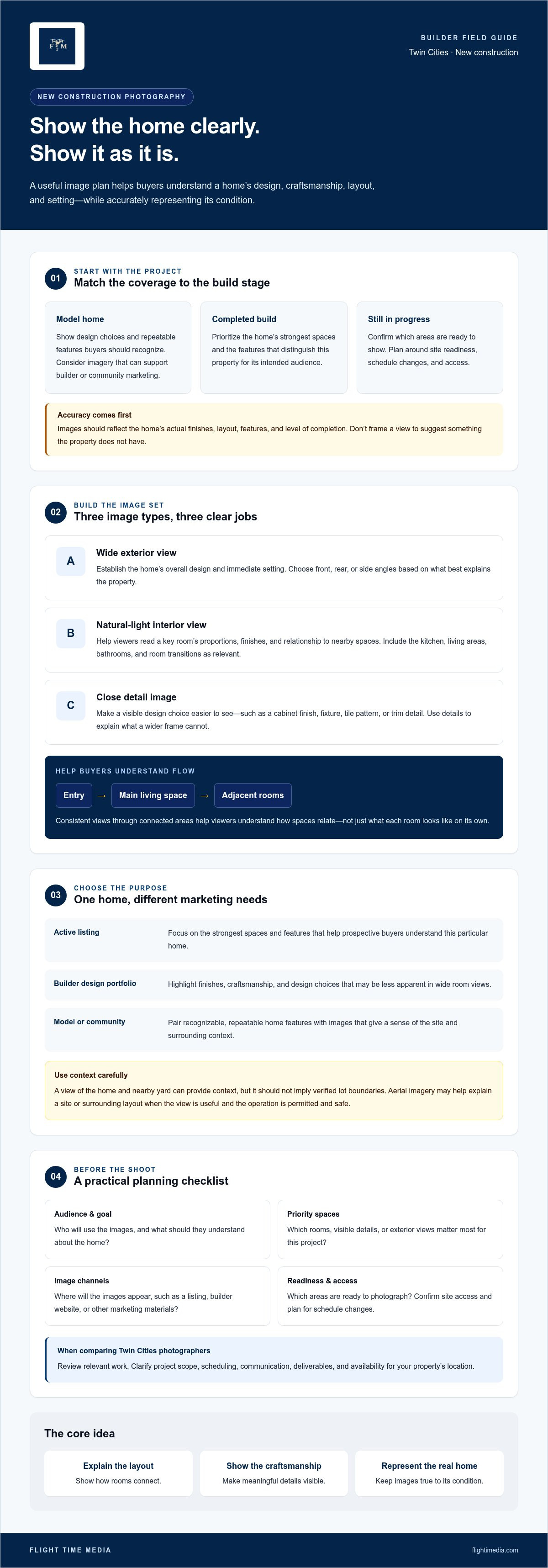
Define the use. Decide whether the images will support an active listing, a model home, builder marketing, or another specific purpose. Identify the target audience and where the photos will appear, such as a listing page, website, or social channel.
Select priorities. List the key rooms, exterior views, design features, and shared spaces that need coverage. Mark must-have images separately from secondary requests.
Confirm readiness. Check that priority areas are clean, accessible, safely walkable, and ready to photograph. Flag unfinished or unavailable rooms, active work, and features that may change before the shoot.
Coordinate access. Confirm the site address, access instructions, point of contact, areas the photographer can enter, and any active-work restrictions. Align the visit with the project team’s schedule.
Review deliverables. Before confirming the shoot, clarify which image types are included, how files will be delivered, and the expected turnaround. Plan exterior coverage around the forecast and conditions needed for the requested views. Confirm scheduling details with the media provider.
What should the builder prepare before the photographer arrives?
Make the site easy to navigate. Share the access plan and identify a contact who can answer questions on location. Remove visible clutter from priority rooms, and let the photographer know about areas that are off-limits or still changing. If a room isn’t ready, flag it early so the team can adjust the shot list rather than relying on images that could misrepresent the home’s current condition.
Exterior coverage also depends on timing and weather. Keep the schedule flexible enough to discuss conditions that could affect the planned views. If aerial imagery is part of the brief, confirm its feasibility separately. Flight operations depend on airspace, requirements, authorizations, weather, location, and safety.
How should teams coordinate a multi-home or model-home shoot?
Make one coverage list for the project. Name each home and shared space, then assign a priority and purpose to each location. For example, a model may need broad interior coverage, while another completed home may be included to show a different design or finish. Coordinate access and the order of locations with the project team before confirming the schedule. Then verify deliverables and turnaround with the media provider.
For a project in Minneapolis, St. Paul, or elsewhere in the Twin Cities, review Flight Time Media’s real estate photography services to see which coverage options may fit your plan.
Choosing New Construction Photography in the Twin Cities
The right photographer is a good fit for your build and has a clear process from planning through delivery. Compare providers based on relevant work and how clearly they explain the shoot, not on unsupported rankings or promises of results. For a Woodbury project or a build elsewhere in the Twin Cities, confirm availability for the specific location and schedule you need.
What should builders ask before booking?
Use these questions to assess fit and avoid surprises:
Portfolio: Can you share examples relevant to this property type, audience, and requested image style?
Coverage: Which spaces and views are included, and what final deliverables should we expect?
Scheduling: How will you coordinate site access, project contacts, and weather contingencies for exterior coverage?
Aerial requests: If aerial imagery is part of the brief, how will you determine whether the operation is feasible? Drone operations depend on airspace, FAA requirements, authorizations, weather, location, and safety.
Delivery: What is the expected turnaround, and which deliverables does that timing apply to?
Clear answers matter. A provider should understand whether the shoot is for one completed listing, a model home, or broader builder marketing, then explain how the proposed coverage fits that use.
How can Flight Time Media support a Twin Cities project?
Flight Time Media provides real estate photography and videography throughout Minneapolis, St. Paul, and the Twin Cities. Its services include aerial imaging, 3D tours, floor plans, virtual staging, Zillow Showcase Media, and agent reels. For new construction photography, start with the images the property and marketing plan need. Add supporting media when it serves a clear purpose. Review the real estate media services overview, then confirm current availability for your project.
When you contact a provider, share the property stage, intended use, priority spaces, access details, and any requested add-on coverage. That gives the team the information needed to discuss a suitable plan and clarify deliverables and timing.
Build a Clear Visual Plan for Your Next Project
Strong new construction photography starts with a clear purpose. Choose images that help buyers understand the home’s layout, finishes, craftsmanship, and setting. Then tailor the shot list to the project, whether you’re marketing one completed listing, a model home, or a broader community.
Before the shoot, confirm site readiness, access, priority spaces, deliverables, and timing. Flight Time Media serves real estate professionals and builders in Minneapolis, St. Paul, Edina, Minnetonka, Eden Prairie, Plymouth, Maple Grove, Bloomington, Woodbury, and Lakeville.
Ready to plan coverage for your build? Contact Flight Time Media to discuss your new construction photography needs and confirm availability for your project location.
Frequently Asked Questions
What is included in new construction photography?
Coverage is planned around the property and how you’ll use the images, rather than one fixed set of photos. A shoot may include key interior spaces, exterior views, and close details of visible finishes or craftsmanship. For a model home, the priorities may differ from those for a single listing. Confirm the image scope and deliverables with your photographer before booking so the plan fits your marketing needs.
When should a builder schedule photography for a new construction home?
Schedule the shoot when the spaces and features you want to show are ready, accessible, and safe to photograph. If the images are for a listing, coordinate around the home’s marketing readiness. For model-home or builder marketing, consider when key finishes are installed and can be represented accurately. Share the property stage, intended audience, priority areas, and any changing or unfinished spaces with the photographer before confirming timing.
How is new construction photography different from real estate listing photography?
Listing photography typically focuses on presenting one home to prospective buyers. New-build coverage can also support a builder’s broader marketing needs, such as highlighting design choices, repeatable features, or a model home. A community project may need images that provide site context, while a completed custom home may call for more emphasis on its distinct details. Choose the approach based on the property and intended audience.
Can new construction photography include drone images?
Yes, drone photos can be included when an aerial view adds useful context and the operation is feasible. Flight Time Media offers drone photography and videography. Each flight depends on airspace, FAA requirements, authorizations, weather, location, and safety, so not every property can be flown. Discuss the request during planning and confirm whether aerial coverage is possible for your site and shoot.
What should a builder prepare before a photography shoot?
Confirm site access, a point of contact, the areas to photograph, and any active-work restrictions. Make sure priority rooms are clean, accessible, safely walkable, and ready for the planned coverage. Remove visible clutter where possible, then flag unfinished, unavailable, or changing areas so the photographer can adjust the shot list. For exterior images, discuss weather contingencies and timing as part of the schedule.
How do I choose a new construction photographer in the Twin Cities?
Review portfolio examples that match your property type, audience, and requested image style. Ask each provider to clarify coverage, deliverables, scheduling, communication, and turnaround. Flight Time Media serves Minneapolis, St. Paul, Edina, Minnetonka, Eden Prairie, Plymouth, Maple Grove, Bloomington, Woodbury, and Lakeville. Confirm availability for your project address and ask how access, weather, and any requested aerial operation will be handled.
How quickly can new construction photos be delivered?
Turnaround can depend on the provider and the deliverables included. Ask when the turnaround period begins and which photo deliverables it applies to. If your project also includes video, aerial imaging, or other media, clarify those delivery timelines separately. Agreeing on timing before the shoot helps your team plan listing and builder marketing materials.

Comments